
the Truth About Emotional Eating
Have you ever stood in front of the fridge at 9 p.m., reaching for a snack you didn’t want? I have more times than I can count.At first, I thought I had a willpower problem. I’d tell myself: “Tomorrow, I’ll eat better.” But the cycle would repeat.
The truth?I wasn’t hungry, I was tired, overwhelmed, anxious, and emotionally drained.
Welcome to the hidden world of emotional eating. Here, food becomes a comfort blanket for everything we don’t have time to feel. When we turn to food to soothe emotions instead of satisfy hunger, we enter a cycle that’s hard to break.
What Is Emotional Eating?
We engage in emotional eating when we’re not physically hungry. We eat because we’re trying to cope with feelings, stress, boredom, sadness, anxiety, or even happiness. It’s common. And it doesn’t mean something’s wrong with you.
When food becomes our only coping tool, it can create a cycle. We eat, feel guilty, and then restrict. This leads to feeling worse and eating again.
Sound familiar?
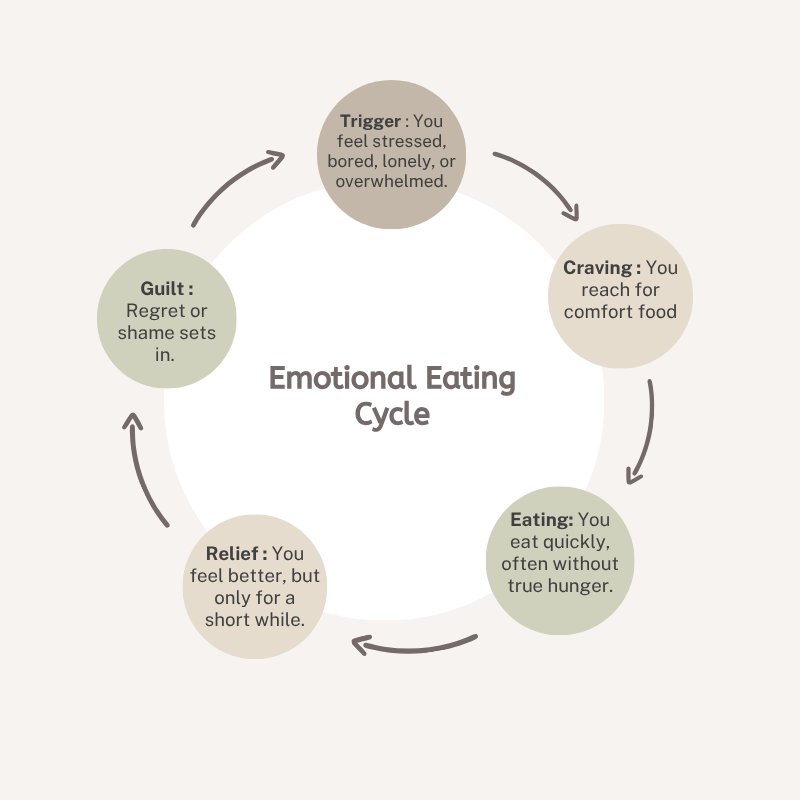
Why We Eat When We’re Not Hungry
Emotional eating isn’t just “lack of willpower.” It’s rooted in biology and psychology. Here’s what science tells us:
- Stress increases cravings: When you’re stressed, cortisol rises. This hormone increases appetite, particularly for foods high in sugar or fat.
Study: Harvard Health Publishing, 2020 - Poor sleep triggers hunger signals: Lack of sleep disrupts hunger hormones. It affects ghrelin and leptin levels, making your body think it needs more food.
Study: Sleep Foundation, 2023
- Blood sugar crashes mimic emotional lows: A spike-and-crash from processed foods can leave you feeling tired. You may also feel foggy and emotional. This leads to more cravings. So we tend to reach for fast comfort food.
- Unmet emotional needs: often show up as food cravings. Especially when we don’t have time or space to care for ourselves
5 Practical Ways to Start Healing Emotional Eating
1. Pause and Check In
Instead of shaming yourself before reaching for food, start asking:
- “Am I physically hungry?”
- “What am I really needing right now?”
- “What emotion am I feeling right now?”
This simple pause helps slow down, create awareness, and break the autopilot habit.

2. Get Quality Sleep
Chronic exhaustion often leads to emotional eating. Prioritizing 7–8 hours of restful sleep can regulate hunger hormones and improve decision-making.

3. Balance Your Meals
Eating whole foods provides a mix of protein, fiber, and healthy fats. This keeps blood sugar stable. It also reduces cravings. For Example, A plate with grilled chicken, roasted veggies, and quinoa offers long-lasting energy, unlike sugary snacks that cause crashes.

4. Remove Food Guilt
Labeling foods as “bad” or “off-limits” increases shame and restrictiveness, often leading to more overeating. Allow space for mindful enjoyment instead of punishment, and enjoy food without guilt. It will help to stop obsessing over it. Freedom helps make better choices naturally.

5. Create a “Comfort List” That Doesn’t Involve Food
Instead of turning to snacks, make a list of quick, comforting things and try:
- A warm bath or shower
- A short walk
- Deep breathing or guided meditation
- Writing down your thoughts or journaling
- Making herbal tea and sitting quietly
These alternatives help soothe your nervous system without relying on food.

Final Thoughts:
Emotional eating isn’t just about food; it’s about feeling. And healing begins when we start listening, with kindness. It’s your body’s way of asking for attention, rest, and support. If you’re stuck in emotional eating, you’re not alone, and you’re not broken. You may just be hungry for rest, space, support, or peace, not food.
Healing takes patience and compassion, not perfection. When you care for your emotions in other ways, food becomes nourishment, not a coping mechanism.
Start here and try:
- Next time you crave something, pause and ask: “What do I really need?”
- Add one real, nourishing meal to your day.
- Make a short list of non-food comforts.
Tiny shifts = long-term change.



Leave a Reply